


A few weeks ago, someone asked me a simple but important question:
“How do I sell digital products when I don’t have an audience?”
And while I’d love to give you a litany of examples of where this is possible, the honest answer is… you don’t.
Imagine opening a shoe stall in the middle of the desert. Beautiful shoes, hand-stitched, great quality. But if nobody’s walking past, nobody’s buying.
The shoes may be the best in the world, but if no one knows you exist, it’s irrelevant.
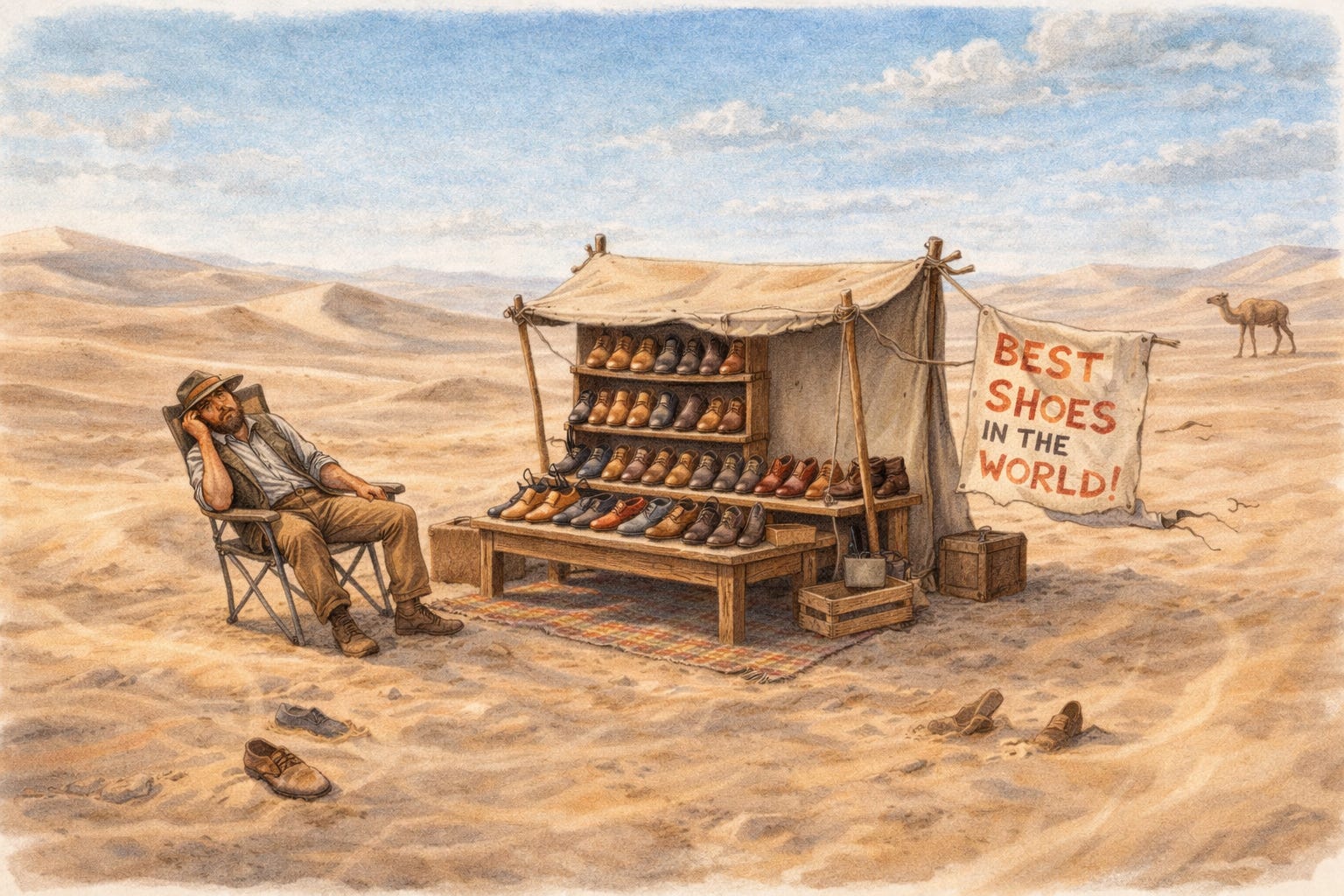
Unfortunately it’s one of the biggest reasons so many brilliant ideas never turn into sales. Not because the products aren’t good, but because no one knows your brand exists yet.
I’ve made the mistake plenty of times myself. I’ve created planners, guides, and mini-courses that I thought people wanted, only to launch them into the void.
No sales, no feedback, just the sound of crickets and tumbleweed whistling through my inbox!
I thought my products were great and super valuable but I just hadn’t built enough trust, connection, or community around them.
Build first. Sell later.
Now imagine you’ve wandered into a huge Bedouin camp, with hundreds of barefoot nomads preparing to cross a rough stretch of mountains.
Their feet are cracked. The ground is freezing. Everyone knows the journey ahead is tough.
You set up the exact same shoe shop, but this time you do it in the middle of the camp.
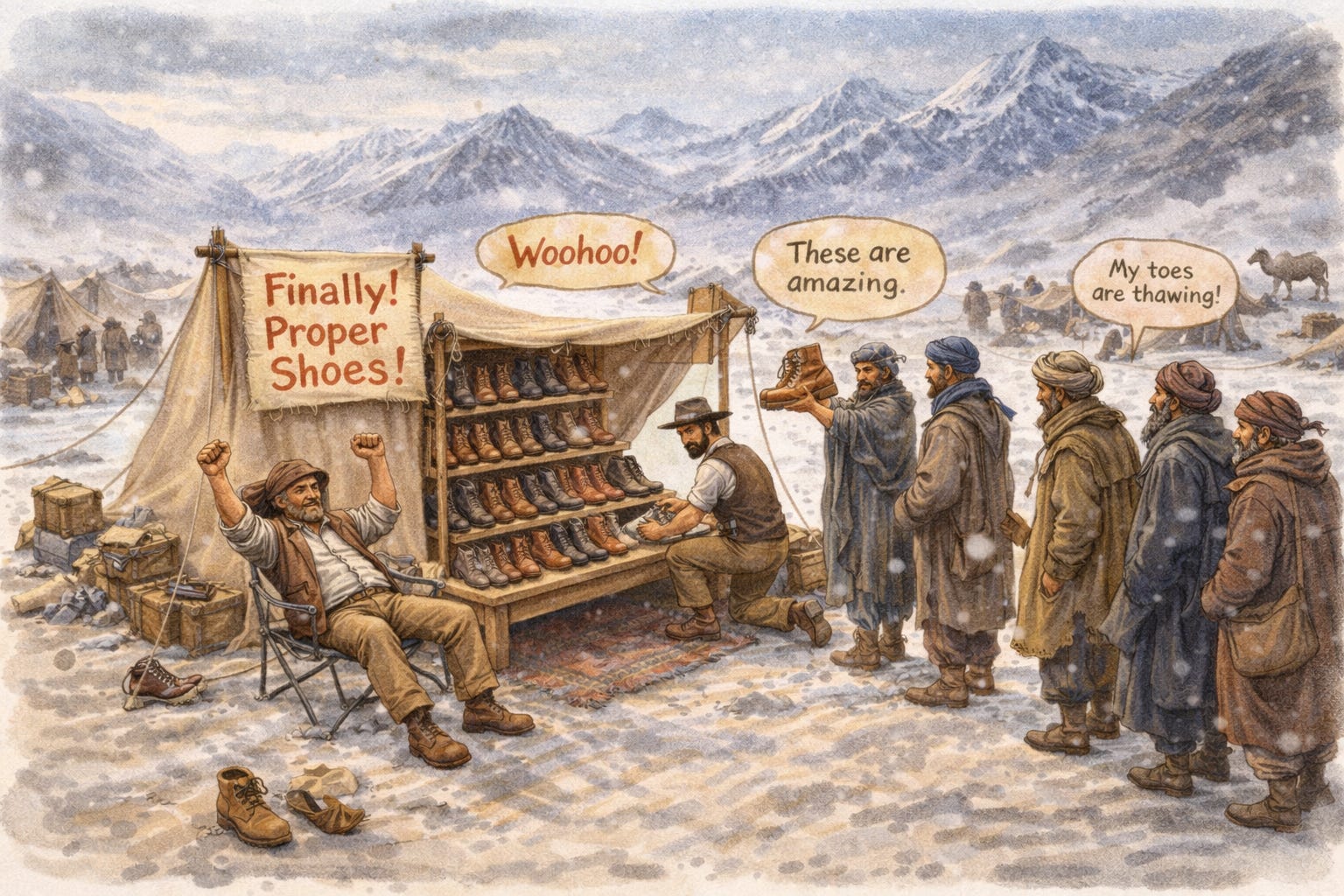
You chat to people. You run short walk-around-the-camp demonstrations. You explain which shoes are best for rocky ground. You help them try on a pair.
How many shoes do you think you’d sell then?
It’s the same product, but a different environment, and a different outcome.
That’s the whole game online.
If you want to sell anything, digital, physical, or otherwise, you need to find the people who might genuinely need what you’re making, show them how it helps, and stay front-of-mind long enough for them to trust you.
The good news is you don’t need thousands of people. A small, engaged group is more than enough to start.
Here’s how to build that group:
Pick your target market. Who do you want to help and why?
Share value consistently. Educate, inspire, or entertain through content that speaks directly to them.
Build your email list. This is where your relationship deepens. Platforms like Substack make it easy to publish, grow, and connect all in one place.
Listen and engage. Ask questions. Start conversations. Notice what people respond to.
Create products that solve real problems. Don’t guess. Build from what your audience tells you they need.
It takes time and tenacity, and that’s where most people fall off. But those who stay the course build a foundation strong enough to sell with ease later.
When Your Products Still Aren’t Selling
If you’ve been creating things for a while and it feels like you’re trying your absolute best but nothing’s moving, you’re not alone. Someone else messaged me recently saying:
“I’ve created a few products, but none of them are selling. I enjoy making them, but I struggle to convince people to buy.”
That feeling is far more common than you think. And it brings us right back to our little Bedouin camp. Because even inside the camp, surrounded by the right people, you can still struggle to sell your shoes if:
1. They don’t know or trust the seller (you).
If you suddenly appear out of nowhere offering expensive hiking boots, they’ll hesitate. They’ve never seen you before. They’re not sure you understand their journey. They need time to feel safe buying from you.
That’s where your warm-up phase online comes in, creating consistent, helpful content and building your audience and email list.
2. You’re offering the wrong thing.
If your shop is full of flimsy flip-flops and everyone’s about to trek across icy mountains, it doesn’t matter how beautiful the sandals are. They’re not relevant right now.
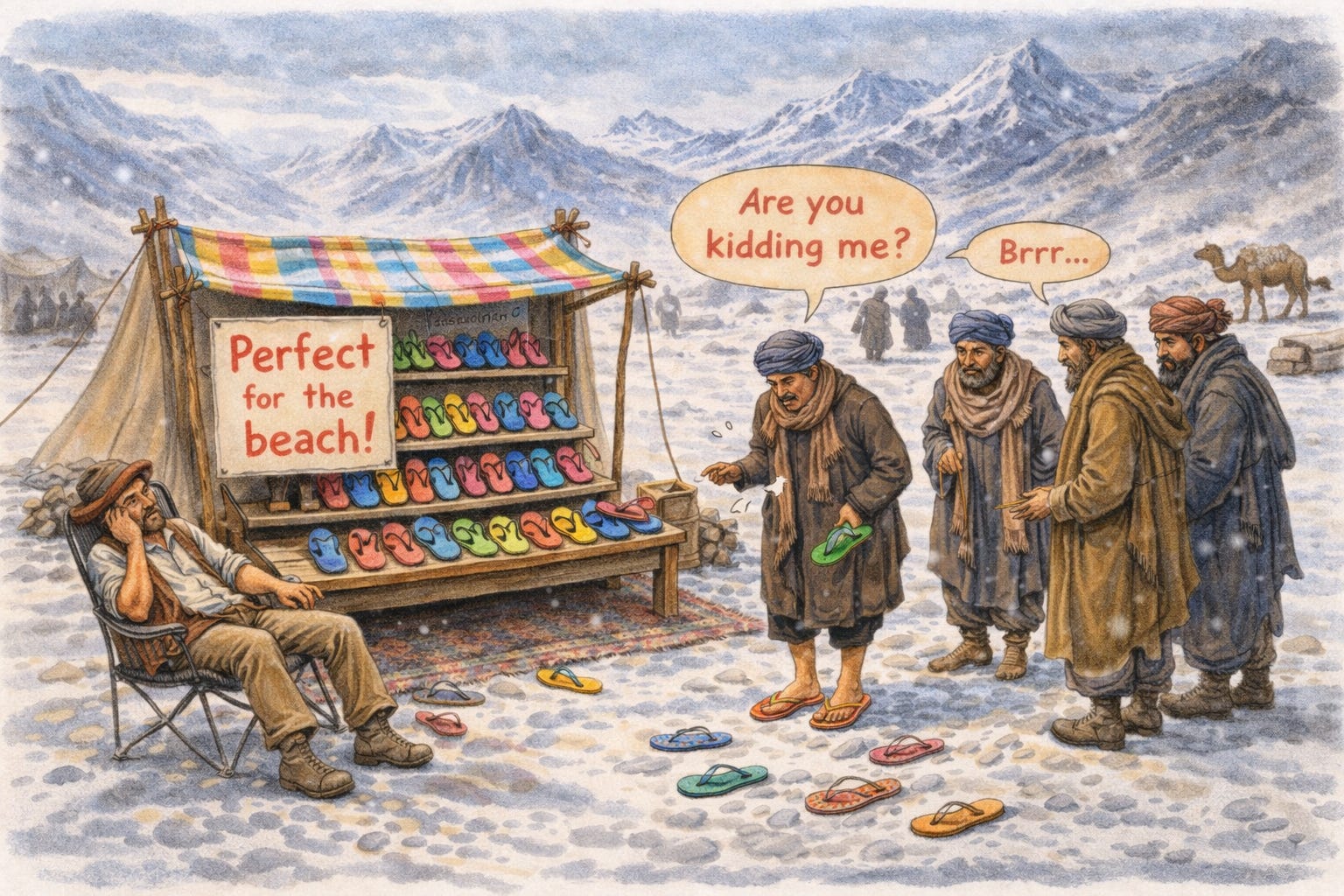
This is what happens when we create the products we like, rather than the products our audience actually need.
3. You’re not demonstrating the value.
If you don’t offer those little walking tours to show the difference between your sturdy boots and their cracked bare feet, they won’t understand why your product matters.
This is your messaging, your examples, your before-and-after stories and your “let me show you what this can do” demonstrations - (webinars, sales pages, articles, videos. podcasts etc).
When you fix these three things, gradually you will start to make some sales. You won’t be retiring overnight, but you will start to feel encouraged!
Because selling isn’t about convincing. It’s about relevance, clarity, and trust.
Starting From Zero (And Why It Feels Hard)
Of course when you’re starting from zero, none of this feels easy. You don’t have a camp. You don’t have barefoot nomads. You’re basically standing in the desert with your shoes, talking to the wind.
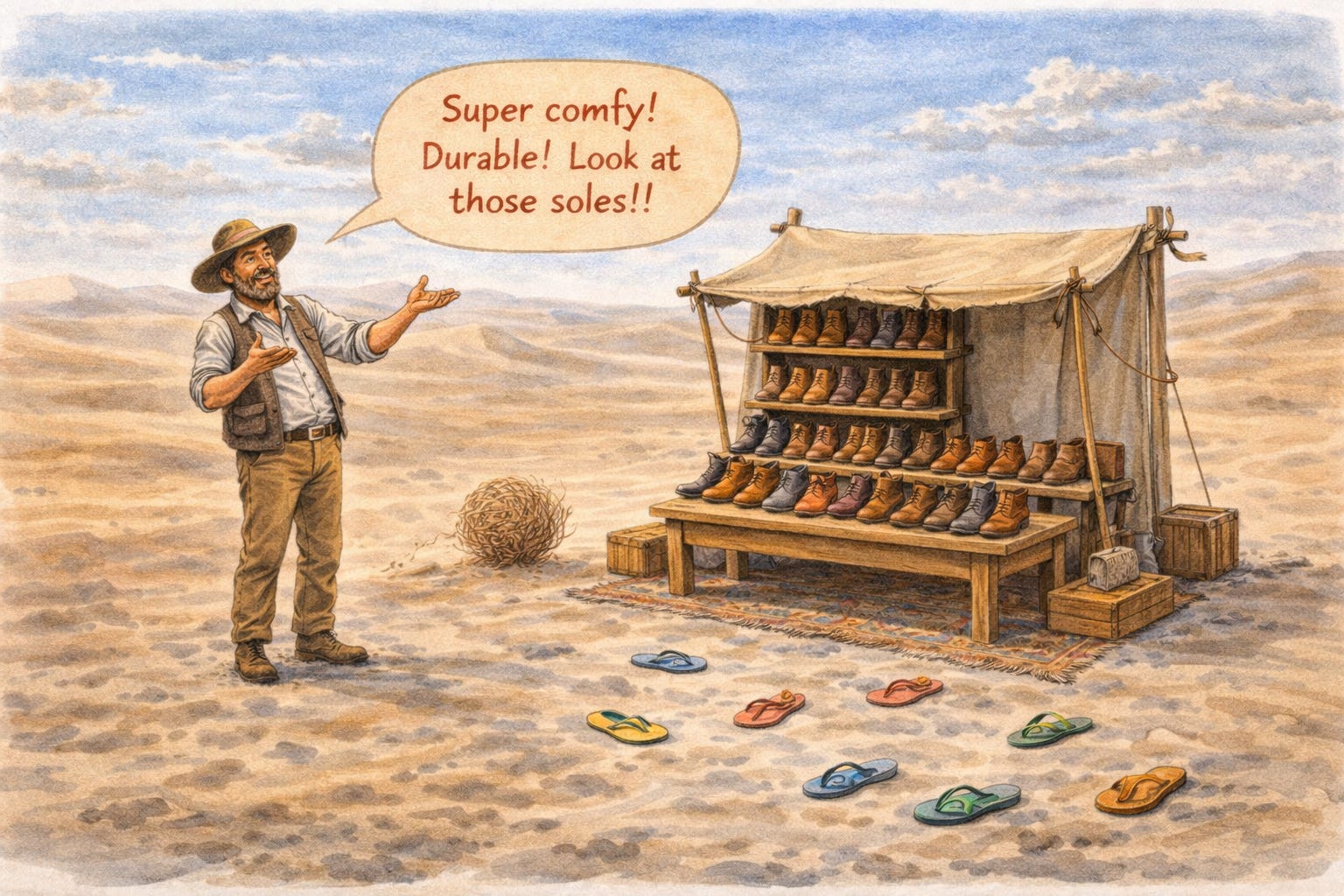
But every single person you admire online started the same way. Zero followers. Zero subscribers. Zero sales. Just one person posting something valuable. Then another. Then another.
The first few months will feel quiet. You’ll second-guess everything, and you’ll wonder whether it’s working at all. But you’ll keep going anyway, because every post, every email, and every conversation is another person wandering into your camp.
And you don’t need hundreds. You just need enough people to start trying on the shoes.
Promote, Then Promote Again
Once you do start creating products, don’t fall into the “post once and pray” trap.
Even the people who love your work will miss half of what you share. They’re busy. Life is loud.
It’s not personal.
Think of it this way. You wouldn’t set up your shoe stall, shout about it once, then sit quietly in the corner hoping someone remembers you’re there. You’d keep chatting. Keep demonstrating, and keep showing people what you’ve got and why it matters.
Tell the story behind your product.
Share who inspired it.
Show the process.
Mention it casually inside other posts.
Teach one tiny part from inside it.
I promise you’re not being pushy if it’s valuable. You’re helping and promoting at the same time. It’s what every successful (and trusted) creator does.
When Nothing Seems to Happen
Someone else said to me recently, “I don’t know if it’s the product or the marketing, but nothing is working.”
Most of the time it’s a mixture of both, and that’s okay. Remember our Bedouin camp.
Even with the right crowd around you, you might be selling flip-flops when they need boots.
Or you’ve got the perfect boots but you haven’t shown anyone what they can do.
Or you’ve done everything right but your camp is still only three people and a camel.
Your early products are experiments. They help you listen better, test faster, and figure out what your particular crowd actually needs.
Sometimes the product is great but the message is off. Sometimes the audience is warm but the offer needs tweaking. Everything gets better the more you create.
And then one day something clicks. Someone buys your product, then shares it with someone else, who also buys it. The sales start to come in.
That moment changes everything. But it doesn’t come from nowhere. It comes from all the months of showing up that felt like nothing was happening.
The Real Secret
The best selling never feels like selling. It feels like helping. It sounds like, “I made this because I know how tough this bit can be, and it might help.”
You don’t need a huge audience, you just need a warm one. It doesn’t matter how small as long as they know you, trust you, and feel like you genuinely understand their world.
Build the camp first. Chat to the people in it. Find out what they need. Then make the thing that helps.
That’s how you turn ideas into income.
And if it feels slow right now, you’re not behind. You’re just building your camp.
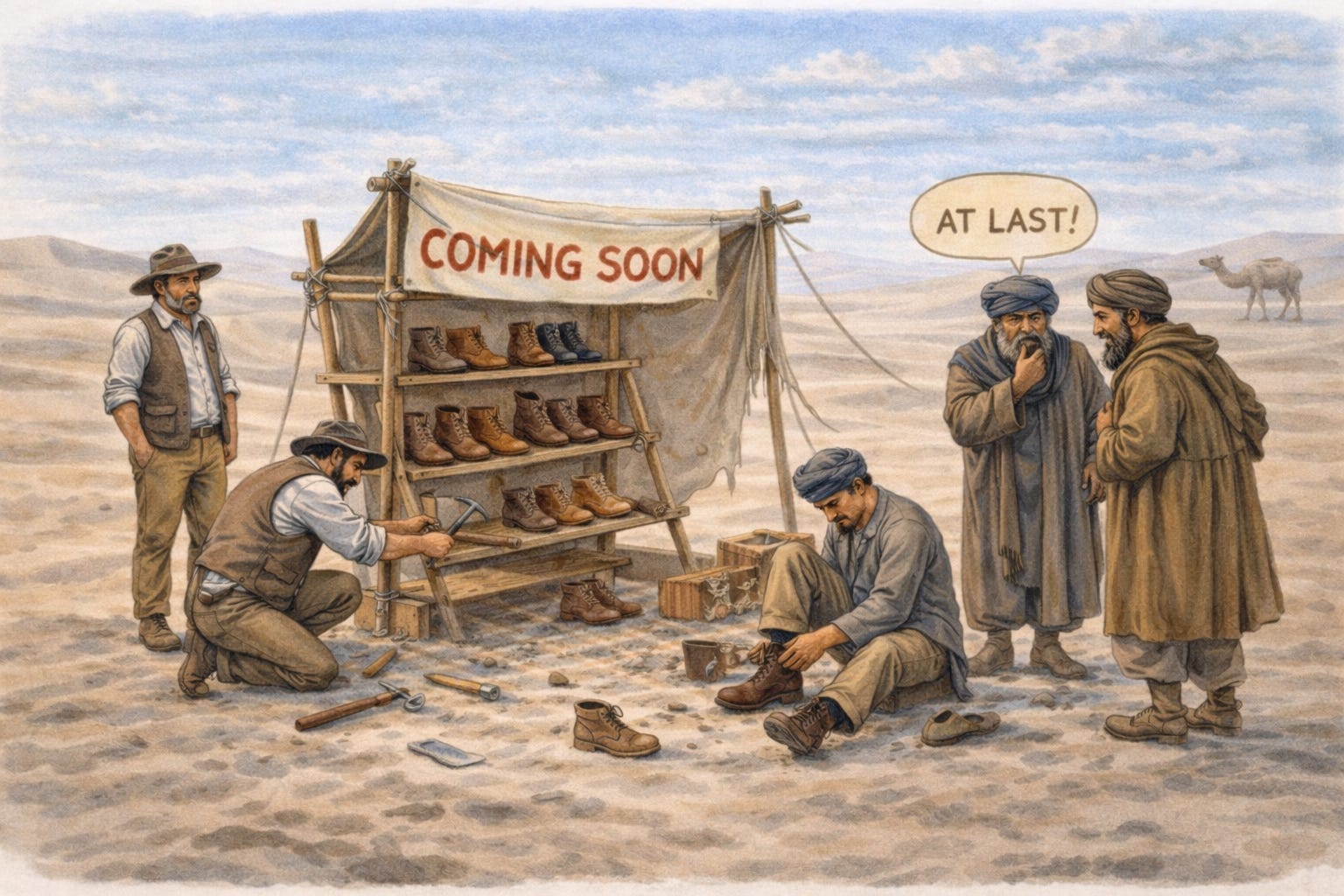
I love the way you write Jo and a brilliant analogy using the shoes in the desert. Great images by the way. Are you into art or did ChatGP give you a hand? Kepp 'em coming. Davina
Such a well thought out and helpful post Jo, especially as we are wading into the digital product pool. Much appreciated!