


Did you know the country of Brazil is named after a tree?
If not, now you do and you can thank me later when you win the local pub quiz!
It comes from pau-brasil, or brazilwood, a tree the Portuguese found growing in abundance along the coast. The wood produced a valuable red dye that became a major export, and eventually the name stuck to the whole country.
I learned this from Adriano, our walking tour guide in Salvador, who was a ridiculously knowledgeable historian! I retained about 10% of the history. My husband retained less.
We’d only stopped in Salvador for two days on route to Lençóis to go hiking in the Chapada Diamantina National Park. I wasn’t expecting much, which is always the moment an experience floors you right?
Because Salvador, being the birthplace of Brazil, is super interesting, and the historic centre of Pelourinho, a UNESCO World Heritage Site, is so ridiculously gorgeous I decided to dedicate an entire post just to this area.
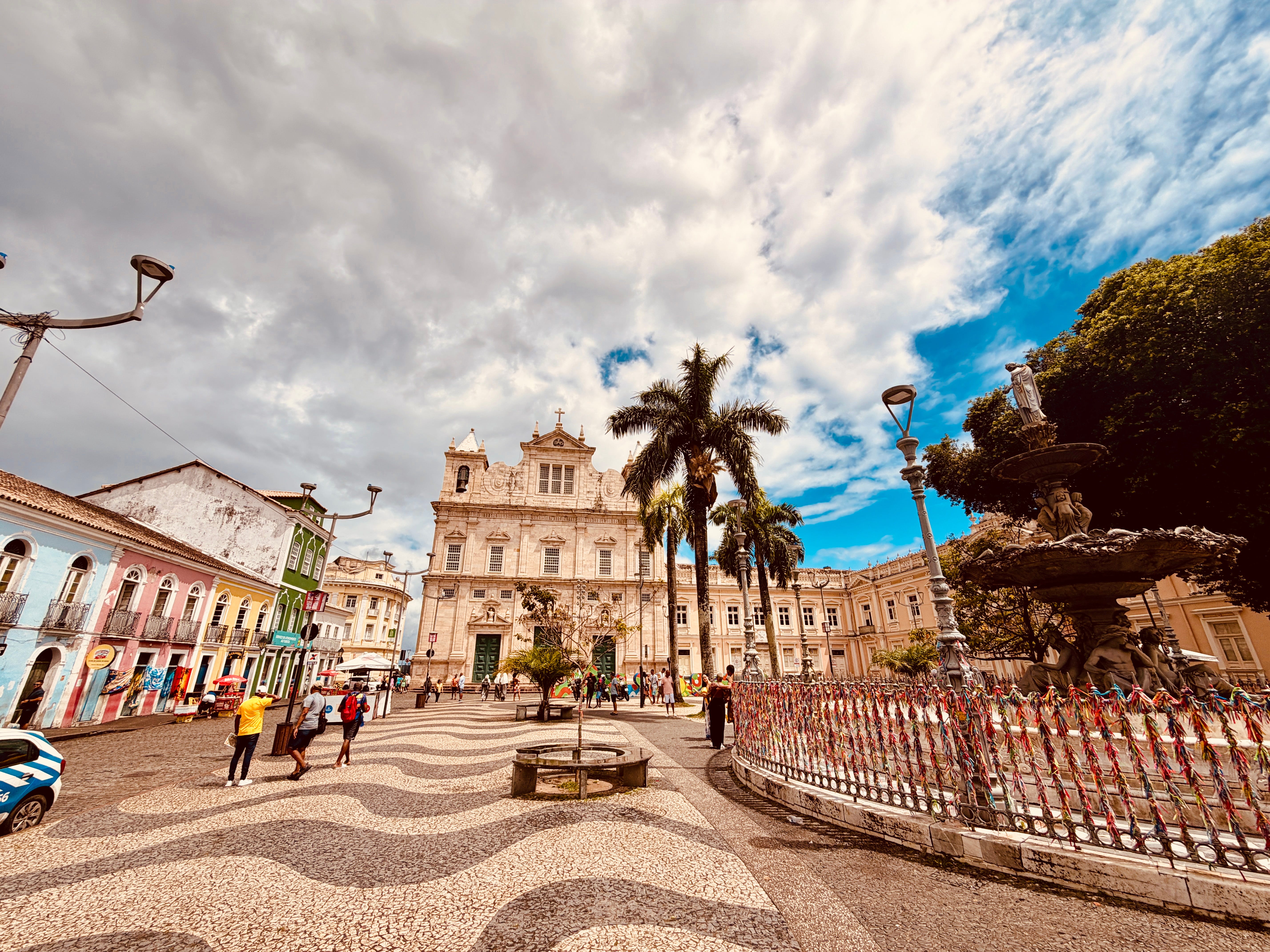
So here’s a quick rundown of our whistlestop 48 hours.
Sunset at the Lighthouse
We stayed in Farol da Barra near the lighthouse, home to the best sunset in Brazil (according to ChatGPT - which of course is always 100% accurate 😉).
It’s also the safer, more touristy end of the city and a solid base if you want to explore without having to stuff your passport in your bra. (Not sure of the equivalent for the male reader! 😂)
We arrived late in the evening so our first real taste of Salvador was Sunday morning, heading out for our walking tour of Pelourinho. I’d done zero research. In fact I couldn’t have pointed to Salvador on a map a week earlier. Sometimes that’s the best way to travel!
The Birthplace of Brazil! 🇧🇷
In 1500, Portuguese explorer Pedro Álvares Cabral landed further south along the coast. But it was here in Salvador that the Portuguese really set up shop.
They named the bay Baía de Todos os Santos because they sailed in on All Saints’ Day. (Imaginative lot, the Portuguese.) Salvador became the first capital of colonial Brazil and stayed that way for over 200 years.
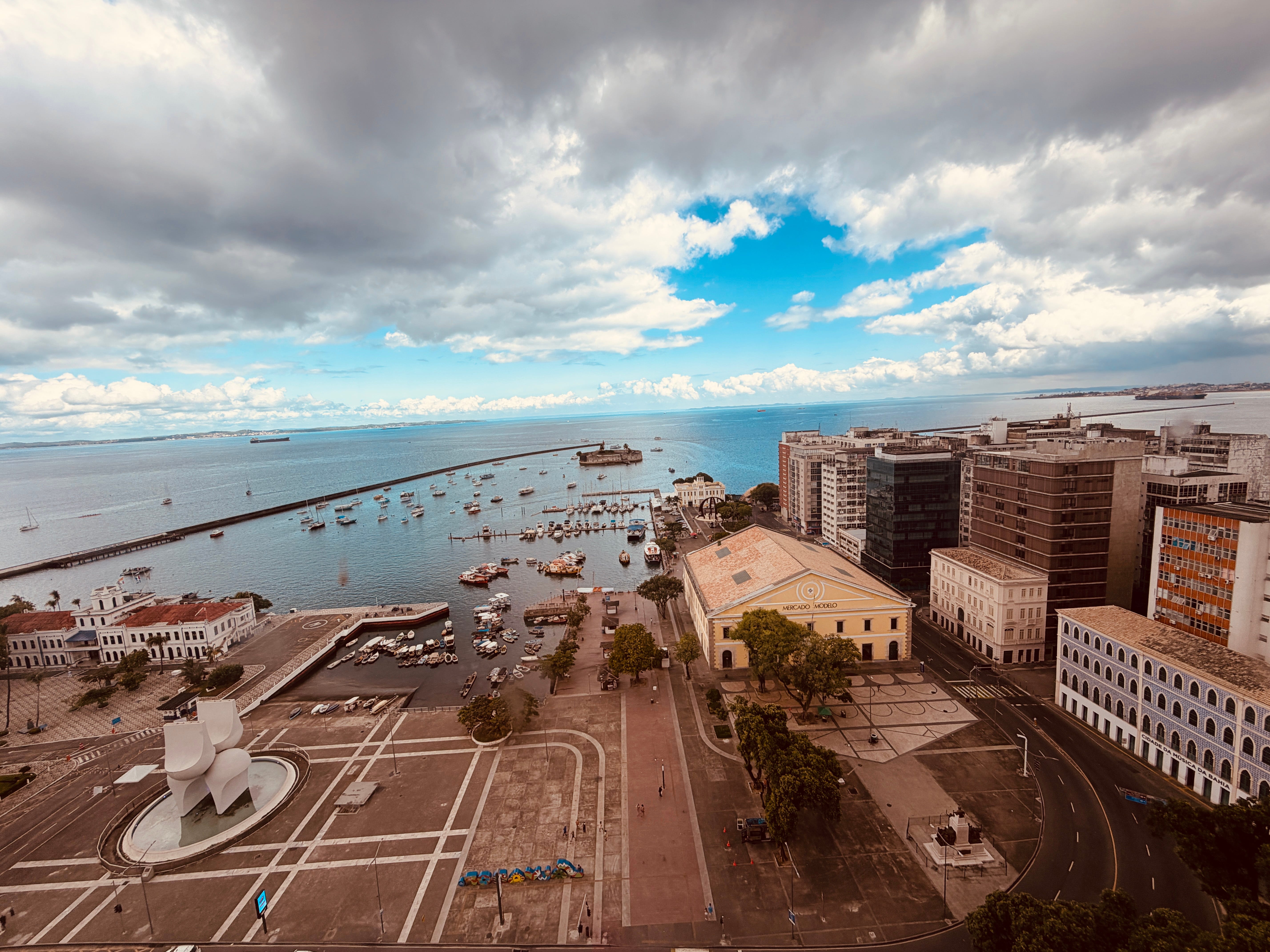
Pelourinho itself means “pillory” in Portuguese, named after the post in the main square where enslaved people were publicly punished.
And that’s the thing that starts to dawn on you as you walk around. This gorgeous, Instagram-worthy town was built on top of one of the most brutal chapters in human history.
The African Heart of Salvador
Adriano walked us through the layers of African culture woven into everything here.
Salvador is the largest city of African descent outside of Africa, and it shows. The influence is everywhere, in the music, the food, the religion, the art.
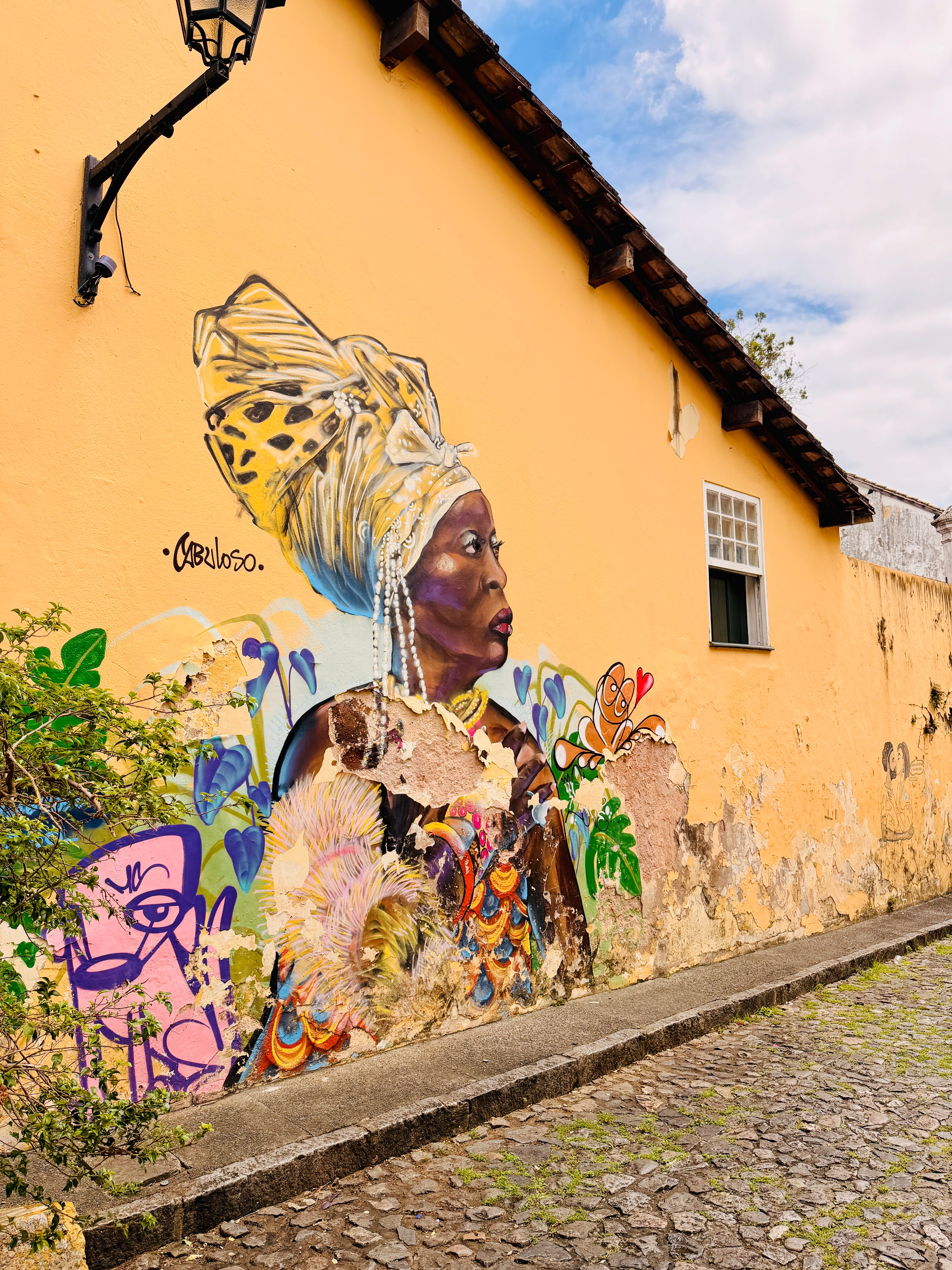
The bit that really stuck with me was about Candomblé, the Afro-Brazilian religion that took root here. Enslaved Africans were forced to adopt Catholic practices, but rather than conform, they disguised their own deities as Catholic saints. From the outside it looked like conversion, but underneath, their traditions survived. Brilliant.
I particularly liked the stories about the beaded necklaces tied to the orixás (deities), each colour representing a different deity and personality. I fancied myself red, for fire, passion and vital energy. (Menopause has certainly leant itself to the fire part anyway. 🥵)
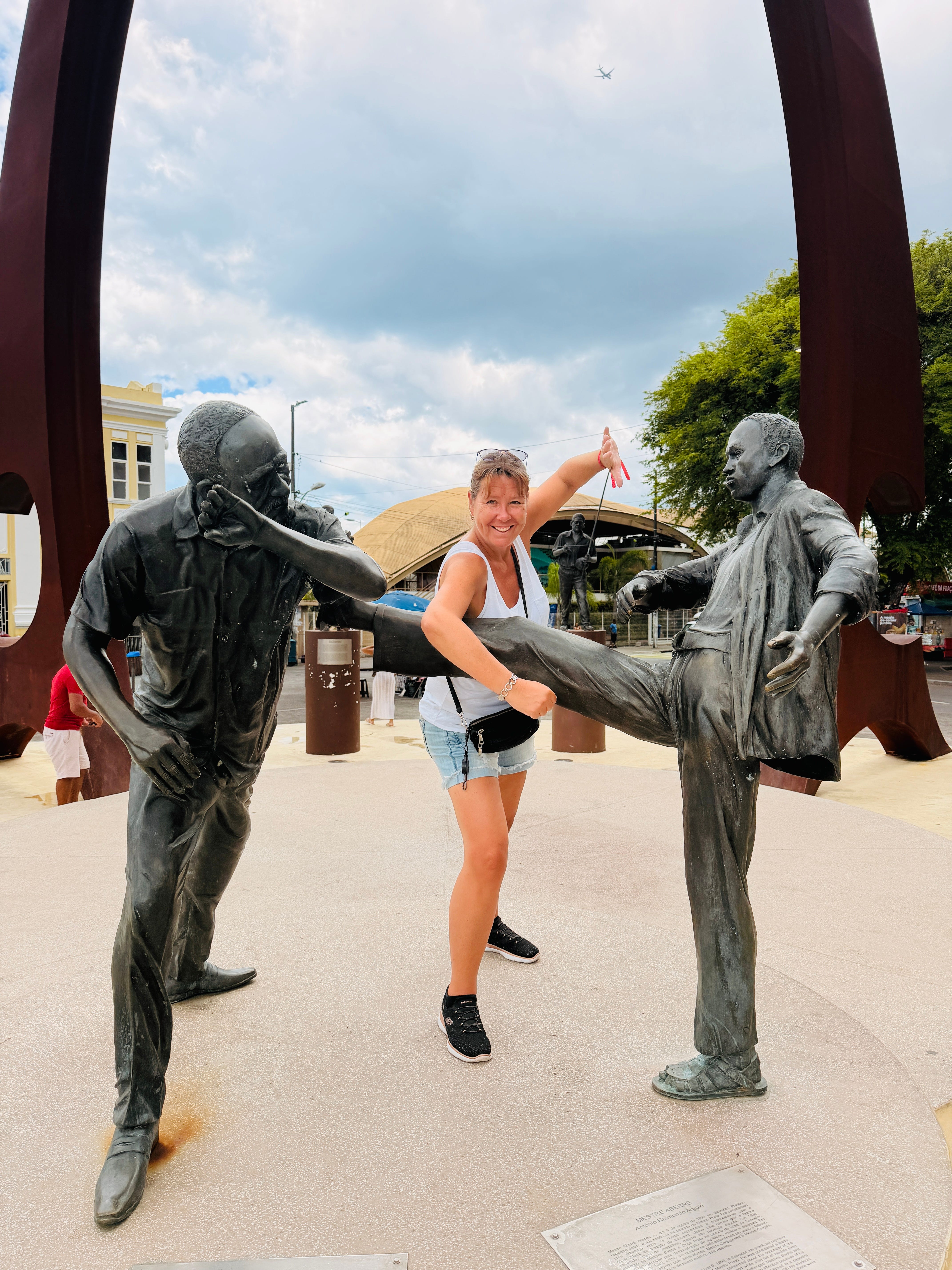
Then there’s capoeira, the martial art/dance hybrid I first saw at Favela Rocinha in Rio.
Created by enslaved Africans as resistance disguised as play, it was illegal in Brazil until 1940. Now it’s practised in town squares all over Salvador and there’s a brilliant monument called the Arena da Capoeira near the port celebrating the biggest names in the tradition.
Michael Jackson Was Here
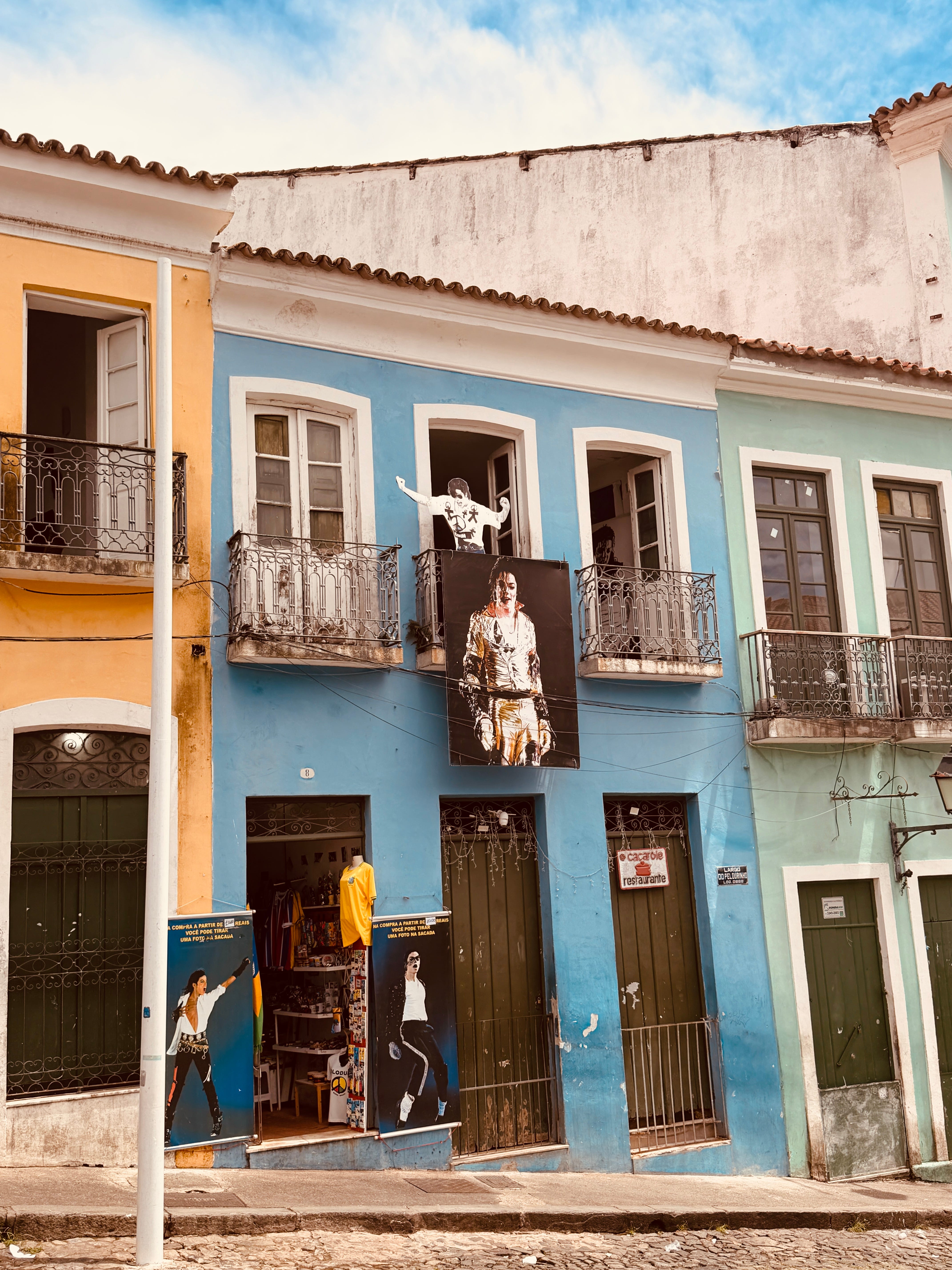
As we wound through the streets, Adriano got visibly excited as he pointed up at a balcony on one of the colonial buildings.
In 1996, Michael Jackson came to Pelourinho to film “They Don’t Care About Us” with Spike Lee. The Brazilian government tried to ban the shoot, worried it would damage the country’s image. Jackson was having none of it. He collaborated with Olodum, Salvador’s legendary drum collective, and the video put Pelourinho on the world stage.
The house is still there. You can pay 10 reais (about $1.50) to go up to the balcony where he danced, or you can do what I did and take a photo from the street like a cheapskate.
Why the Colourful Houses?
Something I’d been wondering the whole tour was why all the colonial buildings were painted in such bright colours.
Turns out they weren’t always like this. Pelourinho was crumbling into serious disrepair through much of the 20th century. A major restoration effort in the 1990s brought the colours, partly to celebrate Salvador’s African and Bahian identity, and partly to attract tourism.
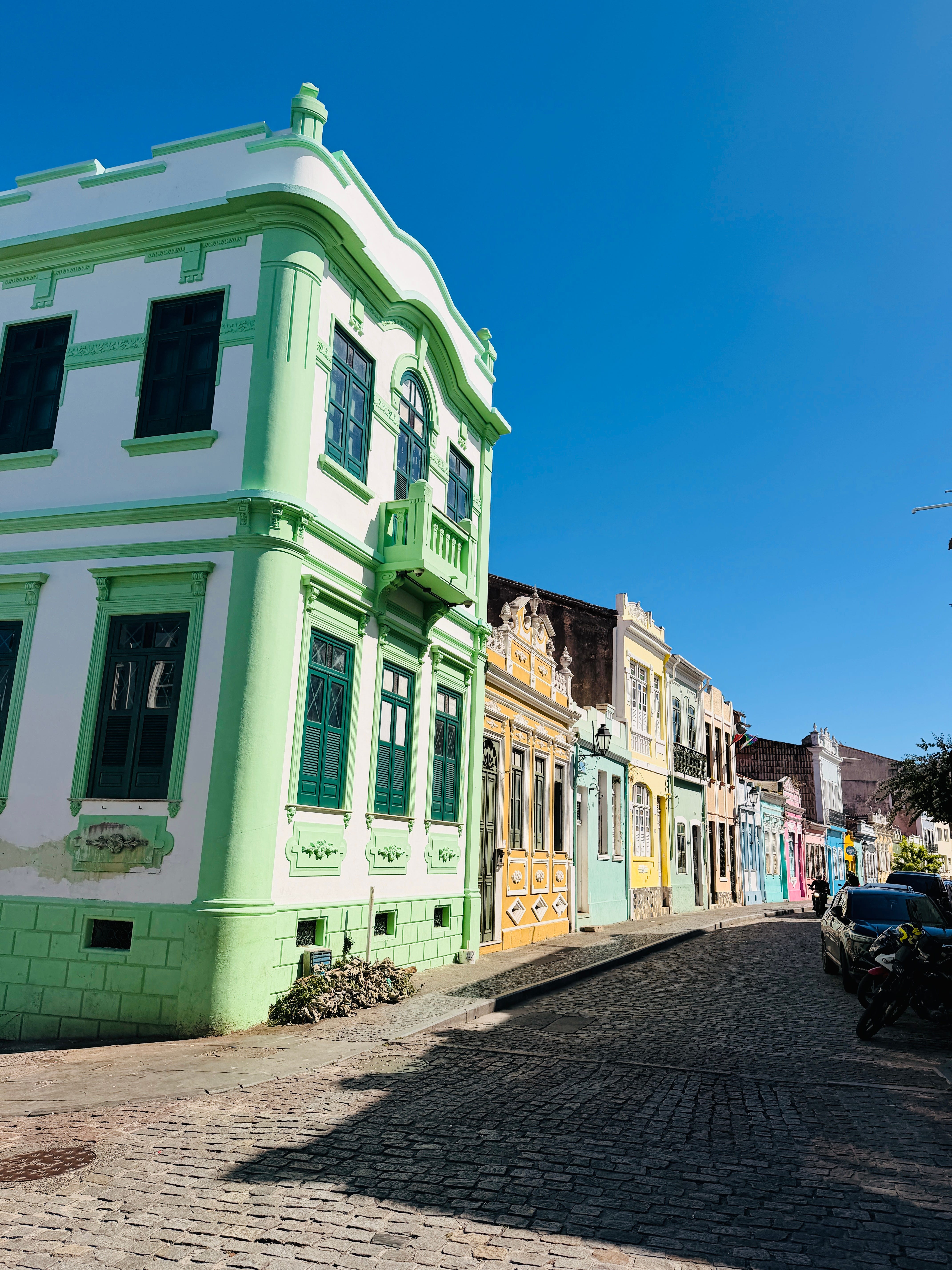
It worked. Pelourinho became a UNESCO World Heritage Site. But the gentrification that followed displaced many of the original residents, which is its own complicated story.
An Homage to a Tragic History
After the tour we wandered down to the Mercado Modelo, the old customs house in the lower city. It’s a bustling market now, full of Bahian arts, crafts and souvenirs. Worth a browse, but it’s what’s underneath that’s important.
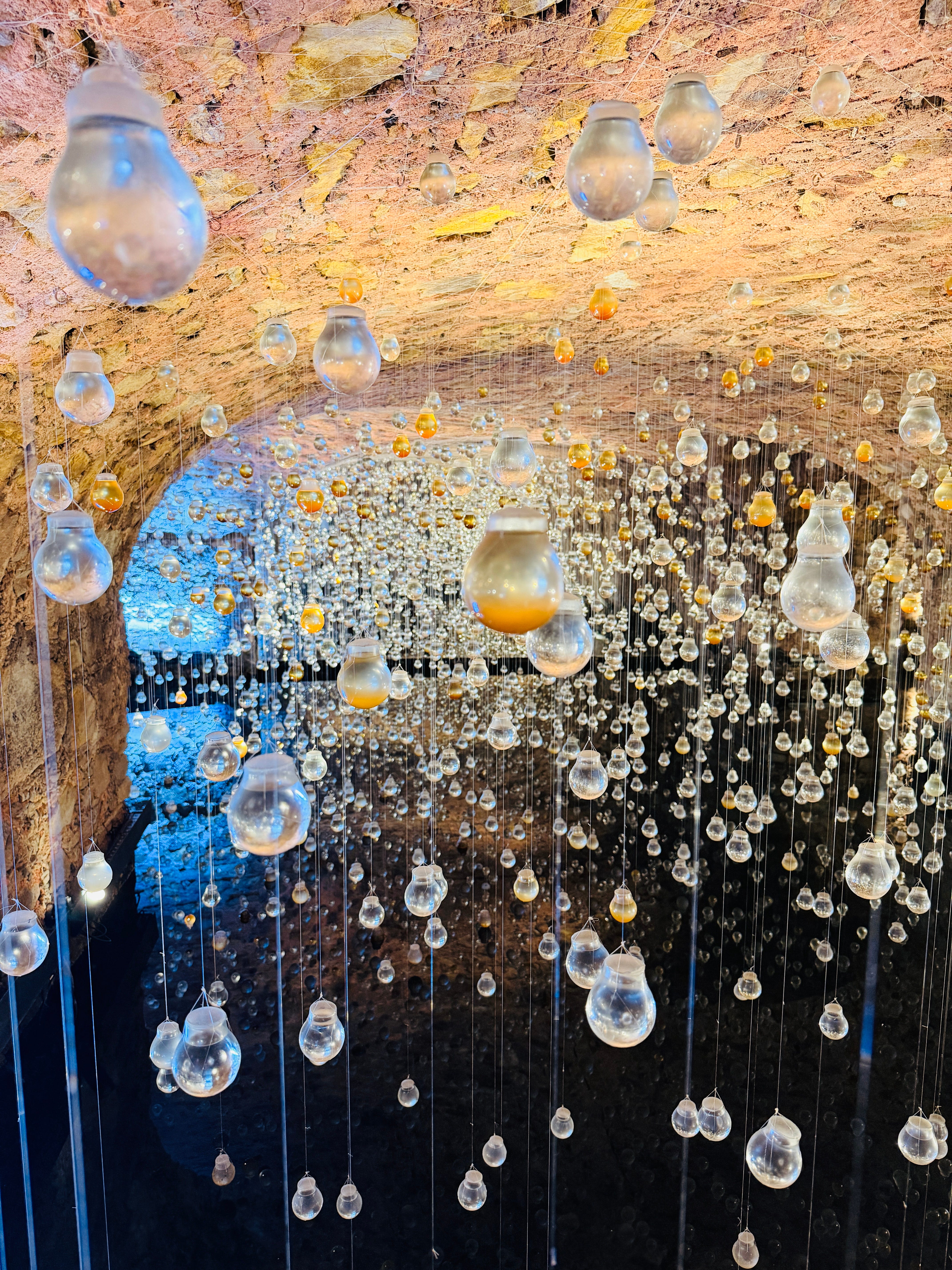
In the basement, the Galeria Mercado sits in what were once slave quarters. Enslaved people brought from Africa were held in these chambers below sea level, chained to the walls until they were sold. The space would sometimes flood with the tide.
After being closed for 15 years, it reopened in 2024 as a gallery with permanent art installations. It’s been done very tastefully. It’s understated, and deeply respectful, creating a space that gently honours what happened here.
Lunch in the Sun
We had lunch at Poró, recommended by Adriano, and it was gorgeous. If you go, get the filet mignon. The quality of the beef was outstanding and the price was laughable.
I insisted on sitting outside in the sun because I’m British and that’s what we do. By the time we finished our steaks, my husband looked like he’d just completed a half marathon. I regret nothing.
Drinking With the Locals
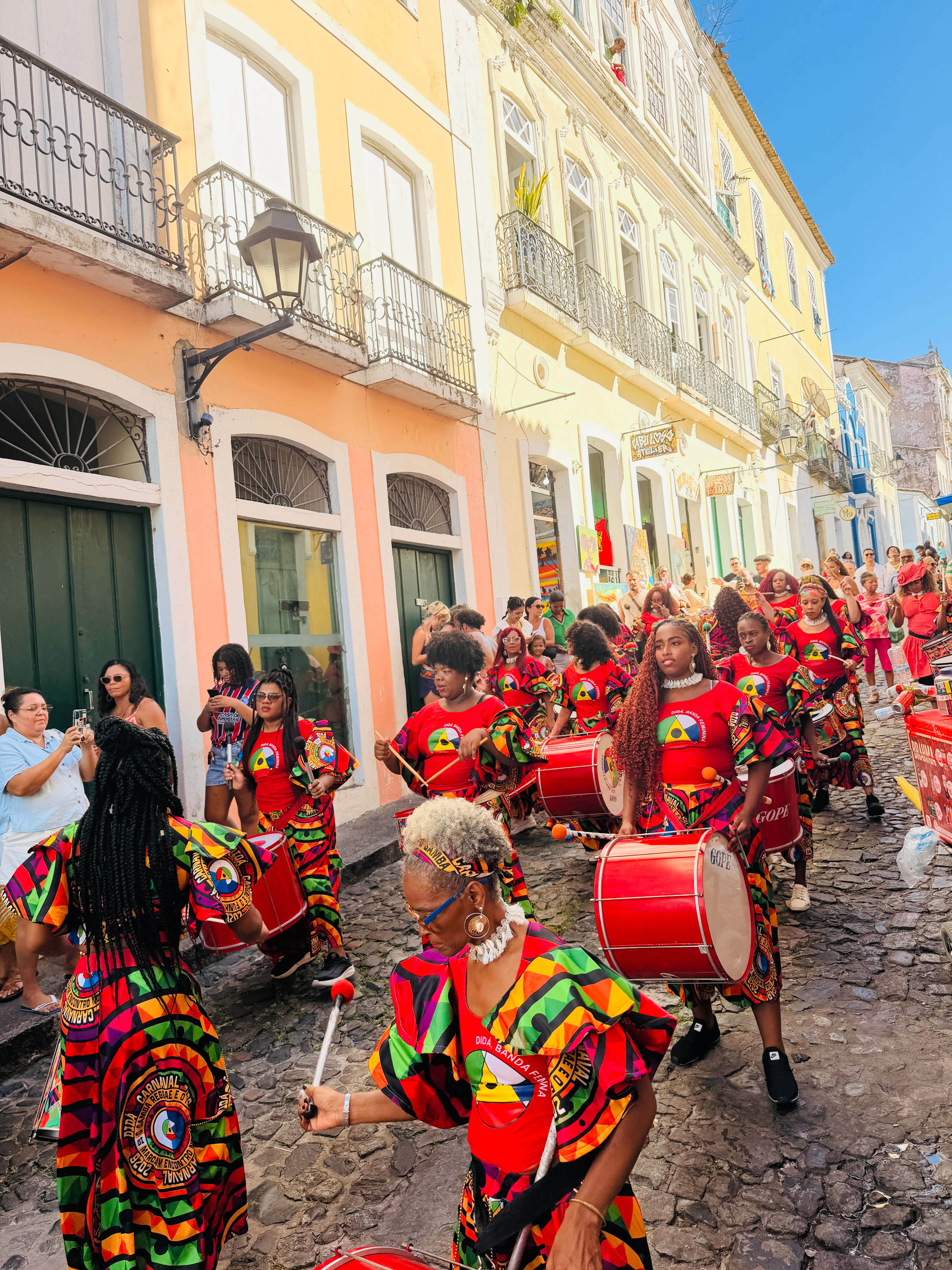
We got back up to the main square just in time to see Didá Banda Feminina marching through the streets, drumming and dancing. It was International Women’s Day and here was an entire band of women spreading joy through the city. Absolutely loved it.
Then we settled in at O Cravinho, the local tourist & Cachaca hotspot! If you don’t know cachaça, it’s Brazil’s national spirit, distilled from sugarcane juice.
We started chatting with a local called Philipe who introduced us to Senzala, a local cachaça. Senzala is smooth, grapey, slightly sweet, and dangerously drinkable. The name means “slave quarters,” which ties right back into Salvador’s story. Even the drinks carry history here.
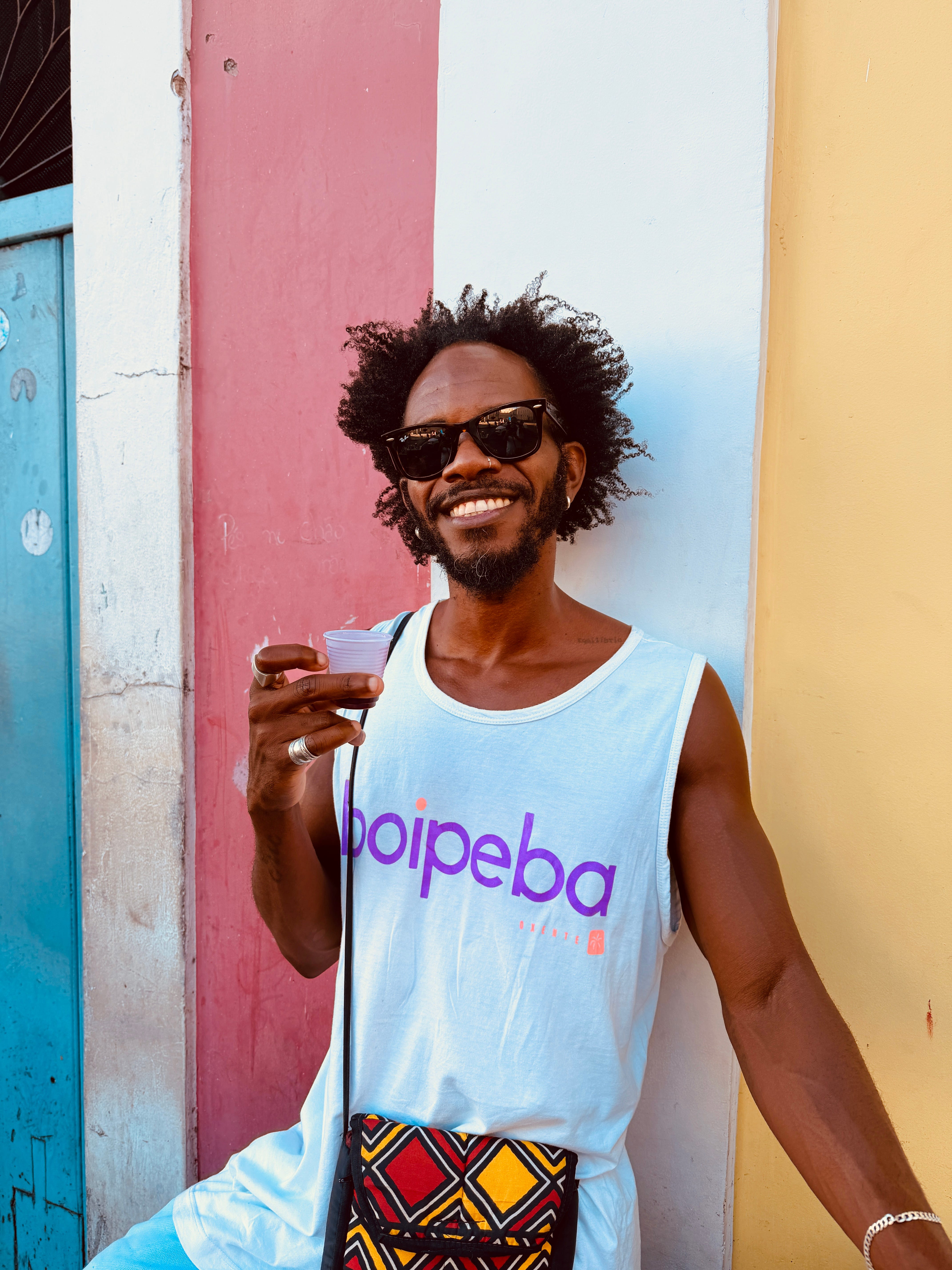
I’m not sure how many we had, but by early evening when we joined the crowd on the hill by the lighthouse to watch the sunset, I was singing along with the band and clapping with the crowd when the sun finally dipped!
Plus the queijo sticks we had on route home felt like the best we’d ever tasted! (What was in that Cachaca??)
Day Two: Bonfim, Moqueca, and Sunset in the Sea
The next morning we headed to the Igreja de Nosso Senhor do Bonfim, the most famous church in Salvador. The iron railings outside are thick with thousands of colourful fitas, tied there by devotees and visitors making their wishes.
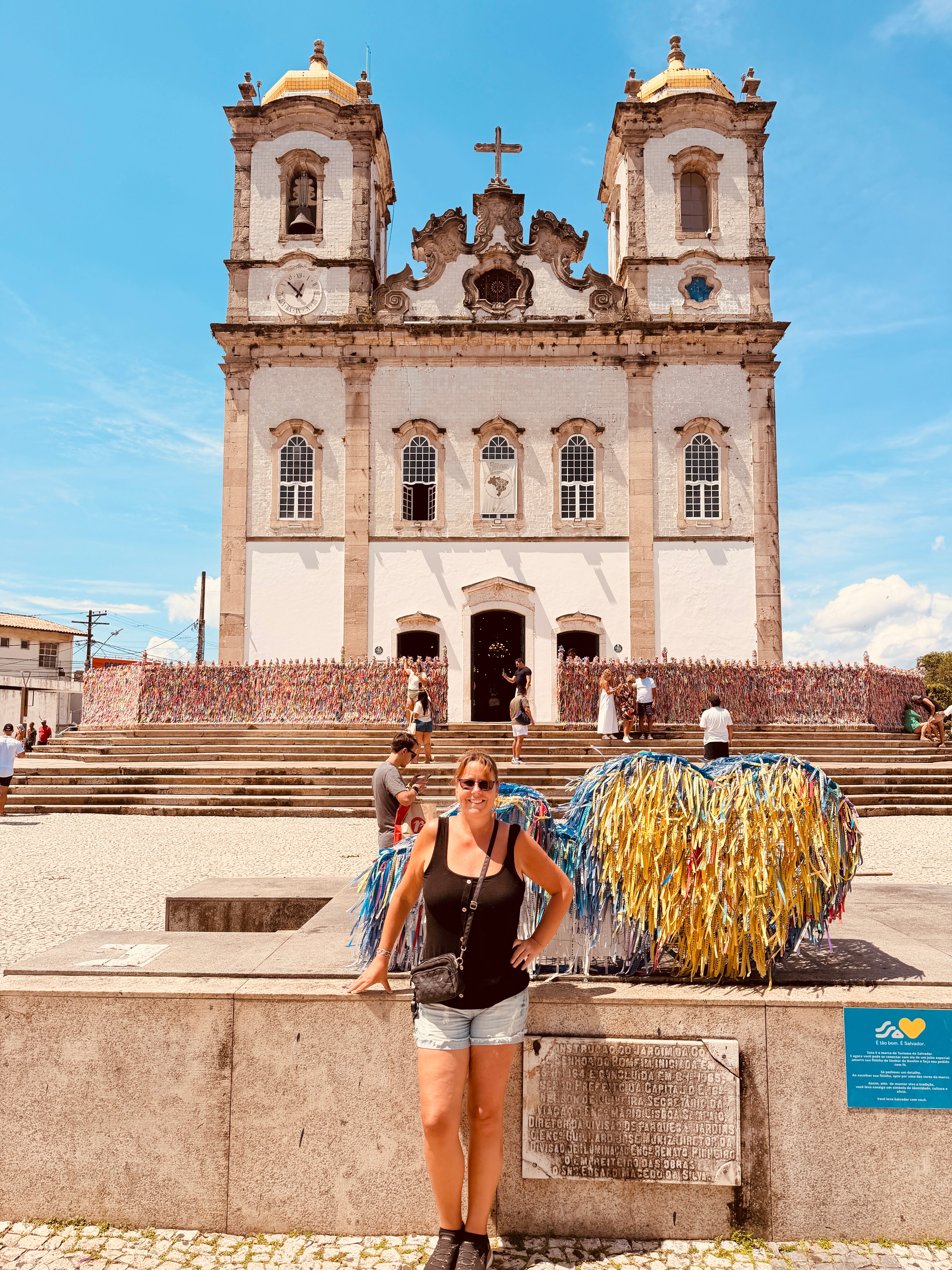
Bonfim means “good end” in Portuguese, and the church has a long reputation for miracles.
The day before, Adriano had given us each a Bonfim ribbon, partly as a gift and partly, he said, so we wouldn’t be hassled by the street sellers. (Smart man.)
The ribbons are 47 centimetres long, the exact length of the right arm of the Christ statue inside the church. You tie them with three knots, make a wish with each one, and when the ribbon naturally wears through and falls off, your wishes come true. You can’t cut it. You can’t tell anyone what you wished for.
We ended up with three, so we tied one each and one together. It was unexpectedly romantic for two people who’ve been married long enough to argue about Google Maps.
Inside, the church was unexpectedly lovely! There’s an alcove at the back filled with photos, handwritten notes and even prosthetic limbs left by people who made the pilgrimage seeking healing. (I’m not convinced all of them were real prosthetics but I wasn’t about to touch one and find out.)
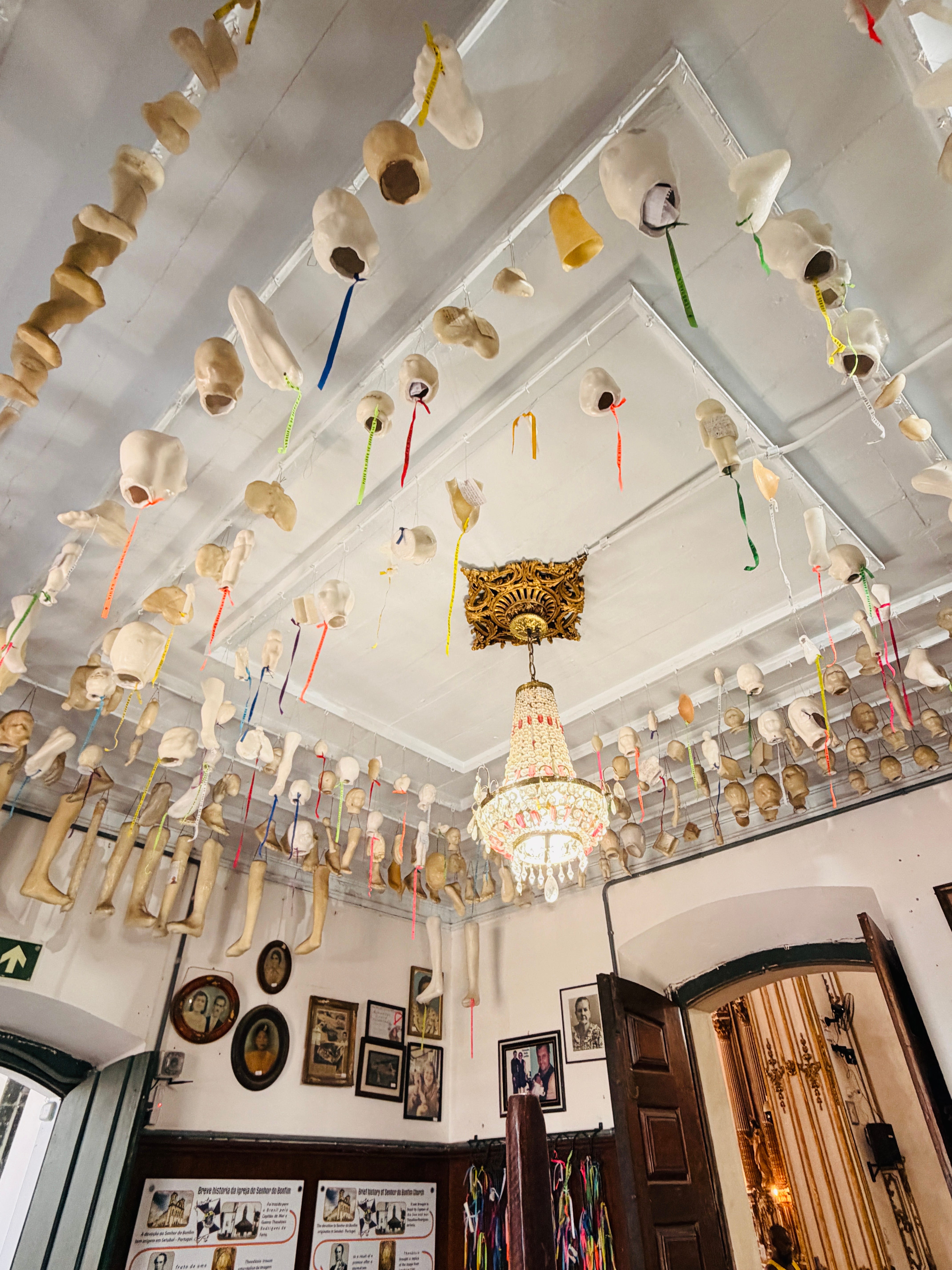
From there we walked to Ponta do Humaitá, a headland that juts out into the Bay of All Saints and tried Moqueca for the first time at a little restaurant overlooking the bay.
Moqueca is a traditional Bahian fish stew made with coconut milk, palm oil, tomatoes and coriander, slow-cooked and served in a clay pot. It sounds gorgeous right?. But was actually a bit tasteless. I’m not sure whether that’s the dish, or the restaurant. Jury’s still out and I’ll update when I’ve tried another one.
Sunset in the Sea
That evening we did one of my favourite things. Bought a couple of strawberry squiffy drinks, put on our swimmers and headed to the beach near the lighthouse.
The night before we’d watched sunset from the hill. Tonight we wanted it from the water. And it didn’t disappoint.
And then, standing in the sea as the sky turned orange, who should appear but Adriano. Off duty, with his wife and family, wading in for their own sunset swim. We stood there chatting in the water, watching the sun go down together.
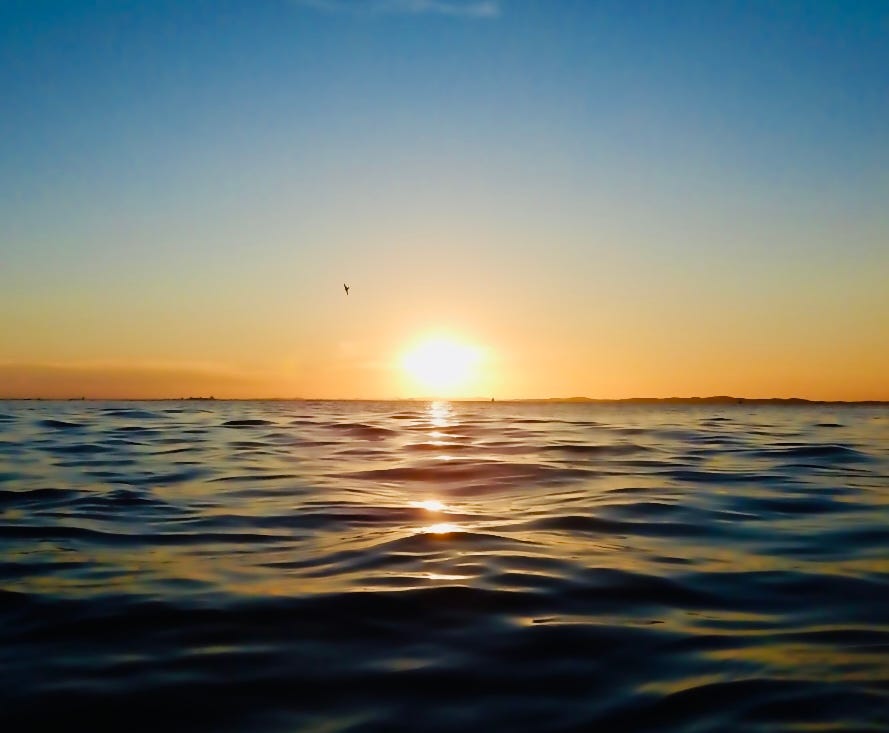
It was one of those completely unplanned moments that makes you think, ‘yeah, this is exactly why we do this….’
A pretty perfect end to a very short stay in Salvador.
Mmm moqueca! It should have been better than tasteless. Definitely try it again somewhere else. PS beautiful pics 🤩
Great story Jo! Loved the women's band! I'm curious about one thing... what would a 'real' prosthetic feel like if you touched it? 🤣🤣 Party on! 🎉🎉