



Do you ever have one of those moments where you realise you’ve spent a whole year (or longer) thinking about something, and that if you’d just started when you first thought about it, you’d be somewhere completely different by now?
I’m sure we all get them from time to time, and it’s a completely useless thought process, as the one thing we can never recover, of course, is time.
It reminds me of that old saying:
The best time to plant a tree was 20 years ago. The second best time is now.
Well a couple of weeks ago Deonne Kahler from Life on the High Wire, asked me how I developed my travel challenge cards, as she has an idea for a set of cards for her niche. (Great idea Deonne!)
And my story all began with a stationery obsession…
I’ve wanted to start my own travel ecommerce brand for as long as I can remember. For reasons unknown I’ve put it off for years, until 2025 I just decided to dig my heels in and make it happen.
My only challenge was, I wasn’t 100% certain what I wanted to sell or what was needed in the market.
So I started to order samples. Travel pillows, packing cubes, luggage tags, sleep masks, boat shoes, backpacks, even a hiking stick that transformed into a chair! You name it, I ordered it. Before long, my lounge looked like a garage sale.
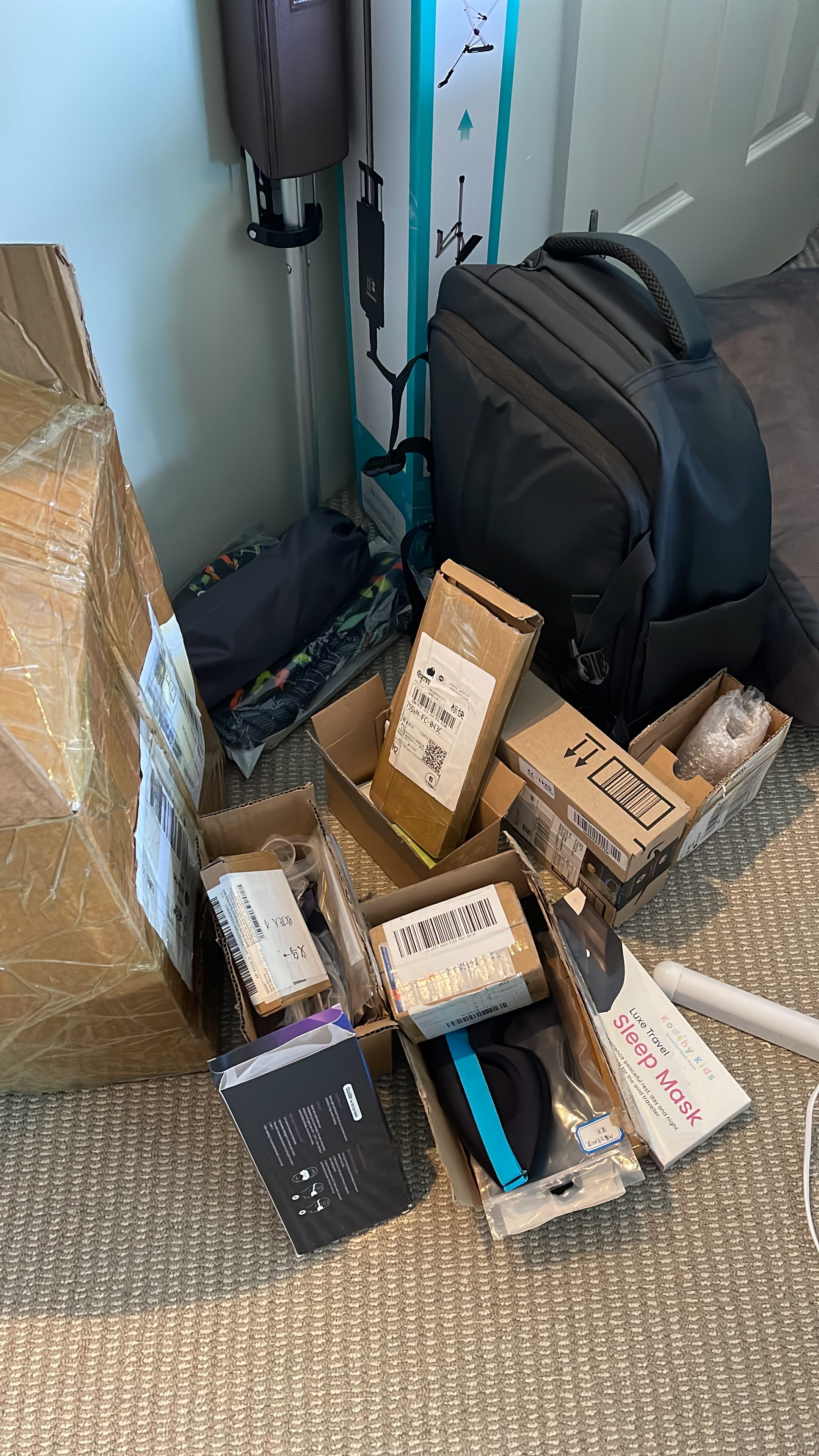
But I still couldn’t decide what I wanted to sell, because none of it excited me.
Nagging at me in the back of my mind was my borderline psychotic obsession with brands like Kikki.K and Typo. Fun, vibrant stationery stores where you go in for a pen and come out with a planner, three notebooks and a desk calendar you didn’t need. I wanted to create something with that feeling, but for travellers.
Then I came across an ecom brand called Awesome Maps, who make towels and maps covered in bucket list destinations, and I loved how scalable it was. One design could go on a map, a towel or a poster, and simply by changing the design, they could create a whole new product. (A bit like print on demand).
It was coming to the end of the summer and I was still scratching my head, which is when my 19 year old daughter hit me with one of my own ‘life lessons’.
“Mum, for crying out loud,” she said. “Just launch something. You’ve always said you learn more by doing than by thinking, and right now you’re being your own worst enemy.”
Ouch.
And then, as if the universe was listening, I bought a set of scratch-off date night cards for my husband & I, and that was that.
The idea for the “This Big World Travel Challenge Cards” was born.
One product, lots of possibilities
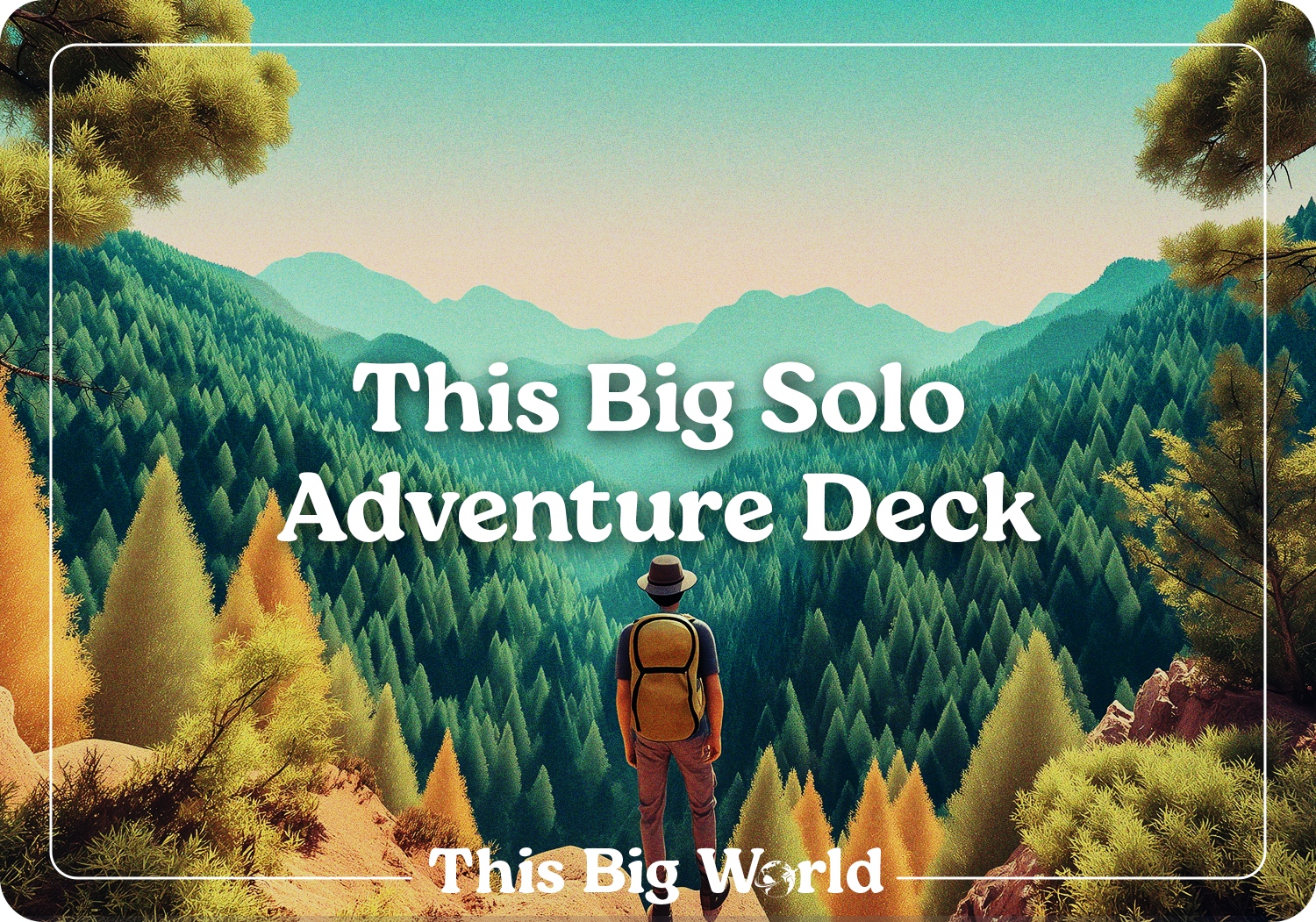
My vision was simple. Create a set of challenge cards, then niche them to different segments within the travel market.
Couples, solo travellers, seniors, scuba divers, hikers, specific places, bucket list destinations. One product type, multiple designs, multiple sub niches.
The scalability was what eventually made me say yes to the idea, and in true Kikki.K style, in time, I’d love to add travel inspired journals, calendars, diaries and so forth.
But one step at a time!
So, for Deonne, and anyone else launching a product, a brand, or any kind of money-making project, here are the 4 main steps I followed, and how it’s playing out for my cards.
From Idea to First Sale
1. Design your offer
Your offer is whatever you’re going to ask people to pay for. For me, it’s a physical product. For you, it might be a paid newsletter, a digital download, a course, a book or a service.
Whatever it is, there are two parts to designing it: what it is, and how it’s packaged.
What It Is
I wrote all 50 challenges myself. I thought about all the places we’ve travelled, all the things we’ve done to push ourselves out of our comfort zone, and all the ways other travellers might like to do the same.
It took several rounds as I wanted to ensure each challenge was a ‘hell yeah’ (my measurement for all my decisions), and as a bit of a perfectionist I could have kept iterating until the cows came home, but there’s a point where good enough is good enough.
As my old friend Jason Fladlien used to say:
Get it done, then get it right!
So get your first version - your MVP (minimum viable product) - out into the world, then improve it based on both how you feel about it, and, most importantly, what your customers tell you.
How It’s Packaged
For my travel challenge cards this was the overall design, the scratch off element and the box.
For the look and feel, I worked with a really good friend of mine, Jared Elvidge, who I’ve known since I started my online journey back in 2010!
He created the overall brand and the card design. Then I brought in a second, more affordable designer to finish off all the individual cards.
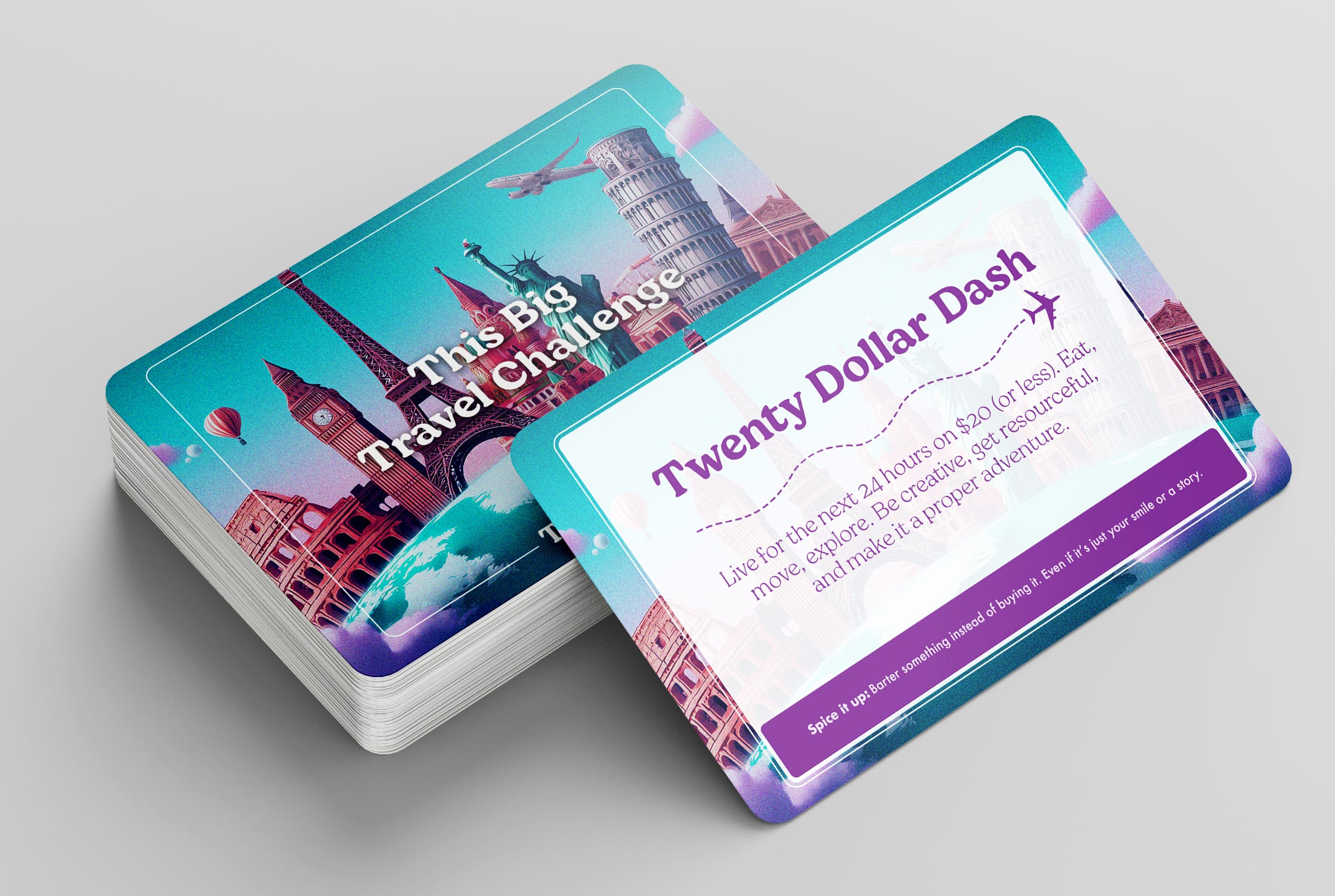
NB: That’s a trick worth knowing, whatever you’re making. Pay for the best person you can afford to set the look and feel, then use someone more affordable to roll it out across everything else.
2. Decide your delivery method
Next you need to decide how your offer is going to reach people.
In e-commerce, there are three main routes.
You can use print on demand, where nothing gets made until someone orders it. (Great for testing)
You can manufacture, ordering in bulk and storing the stock.
Or you can sell other people’s products as an affiliate or distributor.
Digital offers have their own versions: a PDF, a video course, a paid newsletter, a membership.
Each route comes with a different level of risk. Print on demand costs very little upfront, which makes it a brilliant way to test an idea, but the products are expensive, so profit margins are minimal. Manufacturing costs far less per item, but you pay for everything before you know whether anyone wants it, and as a distributor you never own the product.
My cards had to be manufactured. You can’t print scratch-off cards on demand, because the scratch-off layer needs a specialist. So I ordered in bulk and sent the stock to Amazon’s warehouse.
However, for testing new ideas and card decks I’ll definitely use print on demand. Yes it’s pricey, but now I know I can sell these card decks, it’s a great way to see if any of my other ideas will sell before committing to a bulk order and the associated up front costs.
3. Find your platform or partner
Once you know your delivery method, you need to find a platform or partner to deliver it. That might be a factory, a print-on-demand marketplace, Substack for your newsletter, or a platform like Stan for your digital products and courses.
For me, it meant finding a manufacturer, which is the part I dislike intensely, so while I started the process, once negotiations were underway I was thankfully able to pass it all to my husband (he enjoys all that, plus has extensive experience working with Chinese suppliers).
I started by searching Alibaba for card manufacturers and scratch-off specialists and copy & pasted my requirements to about 30 of them (in English & Chinese). I’ll spare you the frustrating back & forth Q & A that ensues, but the goal was to whittle it down to 2 or 3 winning suppliers who could match my budget, were good communicators, had stellar reputations and understood the business.
That took a solid month or two, plus ordering and waiting for samples, final changes and shoring up the order requirements.
Unfortunately due to my earlier procrastination in getting started, this meant I missed the whole of the Q4 period for 2025, meaning I launched a fantastically giftable product in January. Not ideal timing.
But I needed to plant the darn tree!
4. Sell it
So that brings us neatly to the hardest part of all!
When my cards finally went live on Amazon on 29th December, we were house sitting in a beautiful little village called Dulwich in South London in the UK.
It was cold, the dog we were taking care of was on his last legs bless him (he sadly passed about a month after we left 😢), and I remember sitting on the sofa in the lounge crying.
My year of procrastination and planning was over and it had suddenly dawned on me that I now had to sell the darn things, and panic had set in.
What have I done?
Who’s going to buy these?
What if people think they’re stupid?
Why did I do this?
I’m never going to be able to sell any of them…
My husband, ever the sympathetic soul, listened to my lamenting for a while and said:
‘Well, you have 4000 of them sitting in a warehouse in the US so you better get on with it!’
You gotta love that practicality. But he was right. No point in creating something and never promoting it (yes I’m talking to you if you’ve created any kind of product - a course, a guide, a book, a website, a product - and you’re not out there actively ensuring as many people as possible on the planet know about it!)
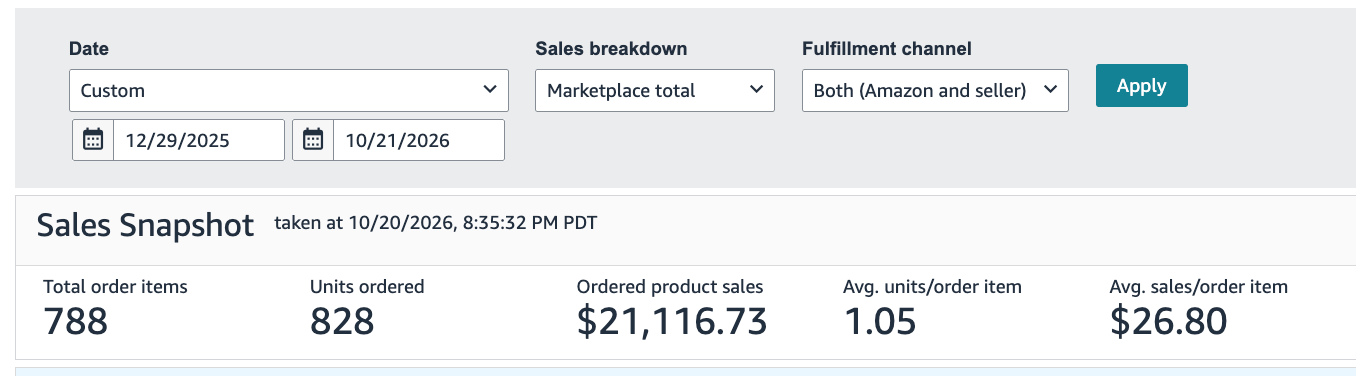
I launched on Amazon first. So far I’ve sold 828 packs there, and just over $21,100 in sales.
Then on 27 September, I launched my own Shopify store. Since then, I’ve had 30 orders and $1,387 in sales, and because so many people buy bundles, that’s 58 packs.
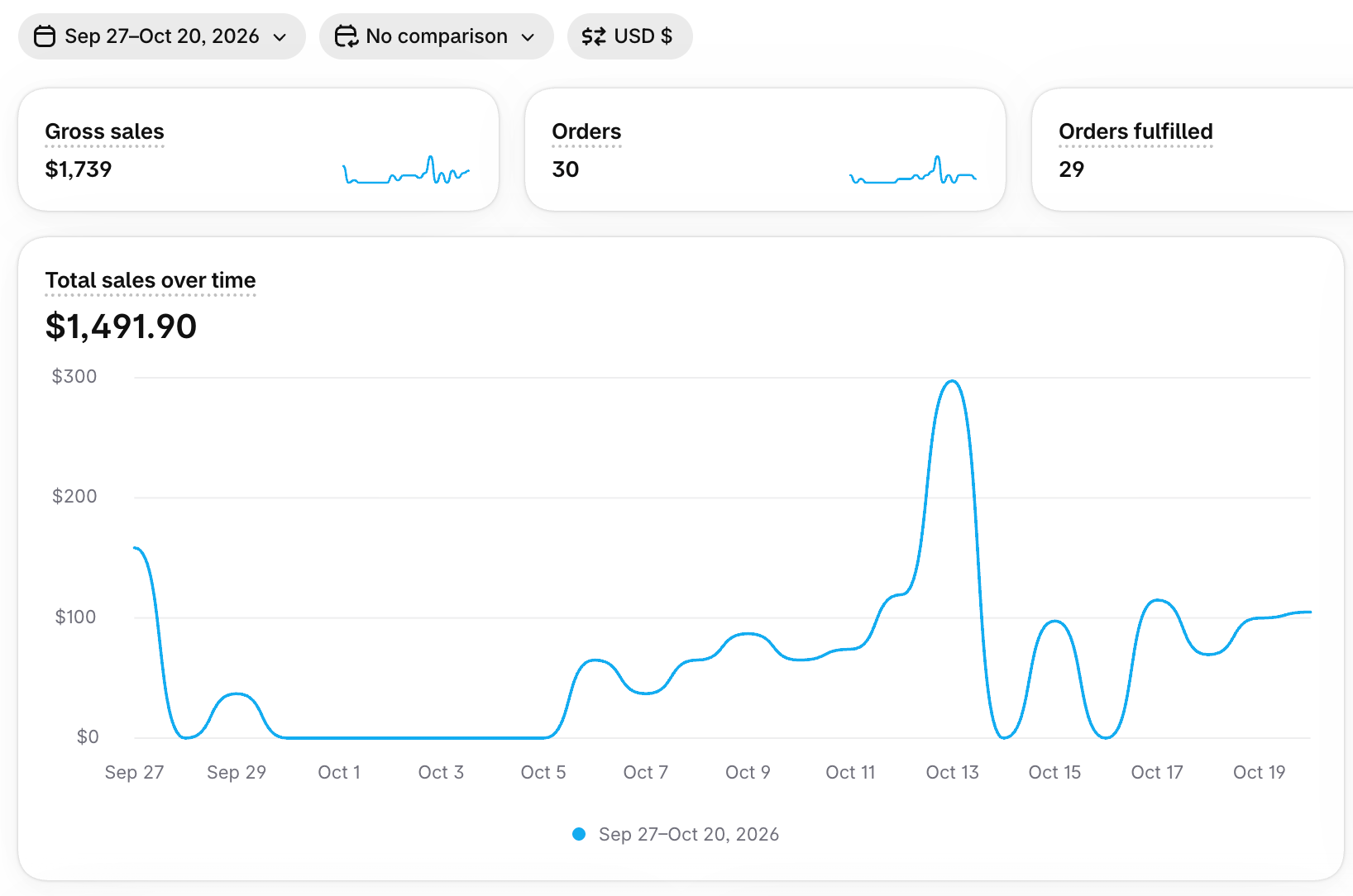
Here’s everything I’ve done to promote the cards so far:
Amazon PPC: the ads that show up when people search on Amazon
Amazon Live: live videos showing the cards in action
Facebook ads with video
Organic content on TikTok and social media
An early offer to my Substack subscribers
Working with creators
AI-generated ads and videos, which I’m still playing with
A niche email list of travellers who are exactly the kind of people who’d buy the cards
What’s working best right now is Facebook ads with video. A video shows what the cards are in seconds, which static photos on a listing struggle to do.
I’m keeping this part short, or this post will get crazy long. But if you’d like a much more in-depth post on promotional strategies to sell your products/offers do let me know in the comments.
In the meantime, you can start with this post:

Key Lessons To Remember
The 4 steps above get you started. Here are the super important lessons I’ve learned over 16 years of building businesses, and have been learning all over again in the last 12 months!
